NASA Discovers Organic Molecules on Distant Exoplanet
NASA Discovers Organic Molecules on Distant Exoplanet
In a groundbreaking discovery, NASA scientists have detected organic molecules in the atmosphere of a distant exoplanet, providing new hope in the search for extraterrestrial life. Using data from the James Webb Space Telescope (JWST), researchers identified complex carbon-based compounds—considered the building blocks of life—on an exoplanet located over 120 light-years from Earth in the constellation of Cygnus.
The exoplanet, named K2-18b, is a “sub-Neptune” world, roughly 2.6 times the size of Earth and located in its star's habitable zone—where conditions might allow for liquid water to exist. The JWST’s advanced infrared instruments allowed scientists to analyze the planet’s atmosphere in unprecedented detail. During a series of observations as the planet passed in front of its host star, the telescope detected the spectral signatures of methane and carbon dioxide, both of which are commonly associated with biological activity on Earth.
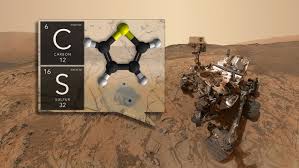
Even more intriguing was the possible detection of dimethyl sulfide (DMS), a molecule on Earth that is primarily produced by marine microorganisms. While the presence of DMS has not been definitively confirmed, its potential detection raises exciting questions about the possibility of microbial life in alien oceans.
Scientists emphasize that the presence of organic molecules does not confirm life, but it does significantly strengthen the case for K2-18b as a candidate for further astrobiological study. These molecules can also be produced through non-biological processes, so additional observations are required to understand their origin.
The findings suggest that K2-18b may have a water-rich interior and a hydrogen-rich atmosphere, a combination that could allow for habitable conditions beneath a thick atmospheric layer. Unlike rocky planets like Earth, sub-Neptunes are thought to have deep layers of gas and liquid, which makes direct detection of surface or subsurface conditions challenging.
NASA plans to conduct follow-up studies using both the JWST and upcoming missions like the Nancy Grace Roman Space Telescope. These efforts aim to clarify the chemical makeup of K2-18b’s atmosphere and determine whether its organic compounds are the result of geological processes—or something more biologically meaningful.
This discovery represents a major step forward in exoplanet research and reinforces the idea that life’s essential ingredients may be more widespread in the universe than previously believed.